Signs You Have a Rodent Problem (And What to Do About It)
Rodents are one of the most persistent pest problems in Northern Colorado, especially during fall and winter when mice and rats seek warmth inside homes. The challenge with rodents is that by the time most homeowners realize they have a problem, the infestation is already established.
Here are the warning signs to watch for — and what to do if you find them.
Warning Signs of a Rodent Infestation
1. Droppings
Rodent droppings are the most common and reliable sign of an infestation. Mouse droppings are small (about the size of a grain of rice) and pointed at both ends. Rat droppings are larger (about the size of a raisin) and more rounded.
Check these areas:
- Along baseboards and walls
- Inside cabinets and drawers, especially in the kitchen
- Around food storage areas
- In the attic, basement, and garage
- Near water heaters and furnaces
Fresh droppings are dark and moist. Old droppings are dry and crumbly. If you’re finding fresh droppings regularly, you have active rodent activity.
2. Gnaw Marks
Rodents gnaw constantly to keep their teeth from growing too long. Look for gnaw marks on:
- Food packaging (bags, boxes, containers)
- Wood trim, baseboards, and door frames
- Electrical wiring (this is a serious fire hazard)
- Plastic pipes and containers
- Cardboard boxes in storage areas
New gnaw marks are lighter in color. Older marks darken over time.
3. Scratching and Scurrying Sounds
Mice and rats are most active at night. Listen for:
- Scratching or scurrying sounds in walls, ceilings, or under floors
- Squeaking or chattering noises
- Sounds of gnawing, especially at night when the house is quiet
These sounds are often most noticeable in the attic, behind walls near the kitchen, and in the basement.
4. Nesting Materials
Rodents build nests from shredded materials. Look for accumulations of:
- Shredded paper, cardboard, or fabric
- Insulation pulled from walls or attics
- Dried plant material
- Cotton or other soft materials
Nests are typically found in dark, protected areas — behind appliances, inside wall voids, in attic insulation, and in storage boxes.
5. Grease Marks and Runways
Rodents follow the same paths repeatedly, leaving grease marks from their fur along walls, baseboards, and pipes. These marks appear as dark smears along travel routes. You may also notice worn paths in dusty areas like attics and basements.
6. Unusual Pet Behavior
Dogs and cats often detect rodent activity before humans do. If your pet is suddenly fixated on a particular wall, cabinet, or area — staring, scratching, or whining — it may be reacting to rodent sounds or scents.
Why DIY Methods Often Fall Short
Many homeowners start with store-bought traps and bait stations. While these can catch individual rodents, they almost never solve the underlying problem. Here’s why:
The entry points remain open. Catching the mice already inside doesn’t stop new ones from coming in. A mouse can squeeze through a gap the size of a dime, and a rat through a quarter-sized opening. Until those entry points are sealed, you’re fighting an endless battle.
Rodents reproduce rapidly. A single pair of mice can produce 5-10 litters per year, with 5-6 pups per litter. By the time you’ve noticed the problem, there’s likely a much larger population than you realize.
Bait placement matters. Professional-grade treatments placed in the right locations are far more effective than consumer products placed where homeowners think rodents might be.
The Professional Approach: Exclusion + Elimination
Effective rodent control requires two things happening simultaneously:
Exclusion: Sealing the Entry Points
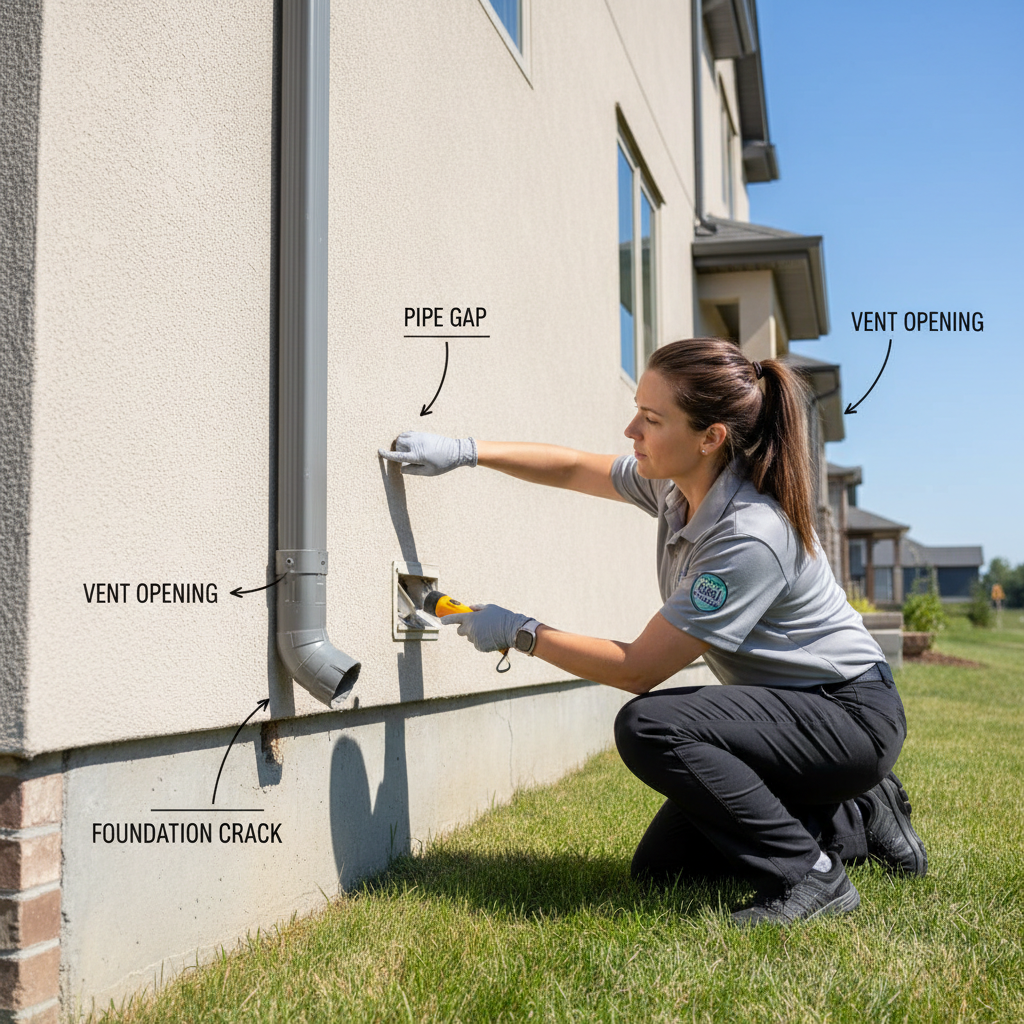
Our technicians conduct a thorough inspection of your home’s exterior to identify every potential entry point. Common access points include:
- Gaps around pipes, utility lines, and cables
- Foundation cracks and gaps
- Worn door sweeps and garage door seals
- Vent openings without proper screens
- Gaps where siding meets the foundation
- Roof line gaps and soffit damage
We seal these openings with professional-grade materials — steel wool, metal flashing, concrete, and other materials that rodents cannot chew through.
Elimination: Addressing the Indoor Population
Simultaneously, we set up interior monitoring and treatment to eliminate any rodents already inside your home. This includes professionally placed traps and bait stations in strategic locations based on our inspection findings.
This two-pronged approach is what makes professional rodent control fundamentally different from DIY methods. We stop the current problem and prevent future infestations.
Health and Safety Risks
Rodent infestations aren’t just an inconvenience — they pose real risks:
- Fire hazard — Rodents chew electrical wiring, which is a leading cause of house fires
- Disease transmission — Mice and rats carry hantavirus, salmonella, and other pathogens through their droppings, urine, and saliva
- Property damage — Rodents damage insulation, ductwork, stored items, and structural components
- Contamination — Rodent droppings and urine contaminate food storage areas and cooking surfaces
Don’t Wait to Act
If you’re noticing any of the warning signs above, don’t wait for the problem to get worse. Rodent populations grow exponentially, and the longer you wait, the more damage is done and the harder the problem is to resolve.
Think you might have a rodent problem? Contact us for a free inspection or call (970) 360-1555. We’ll assess the situation, identify entry points, and recommend the right solution for your home.